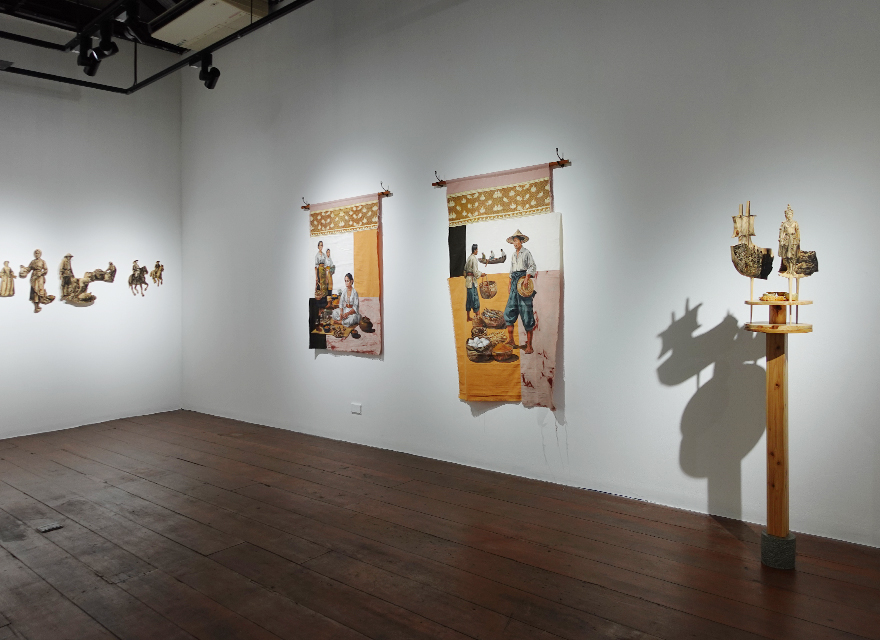
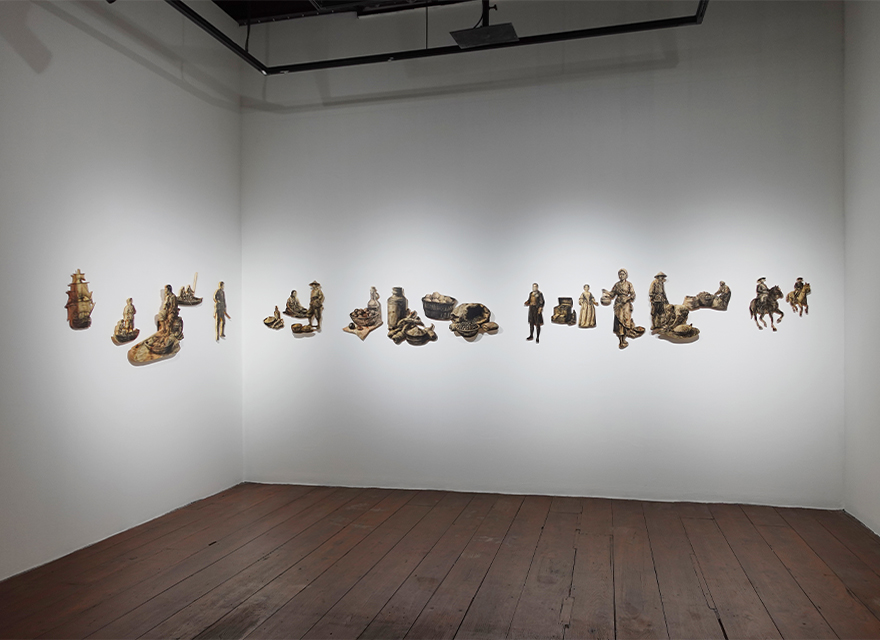
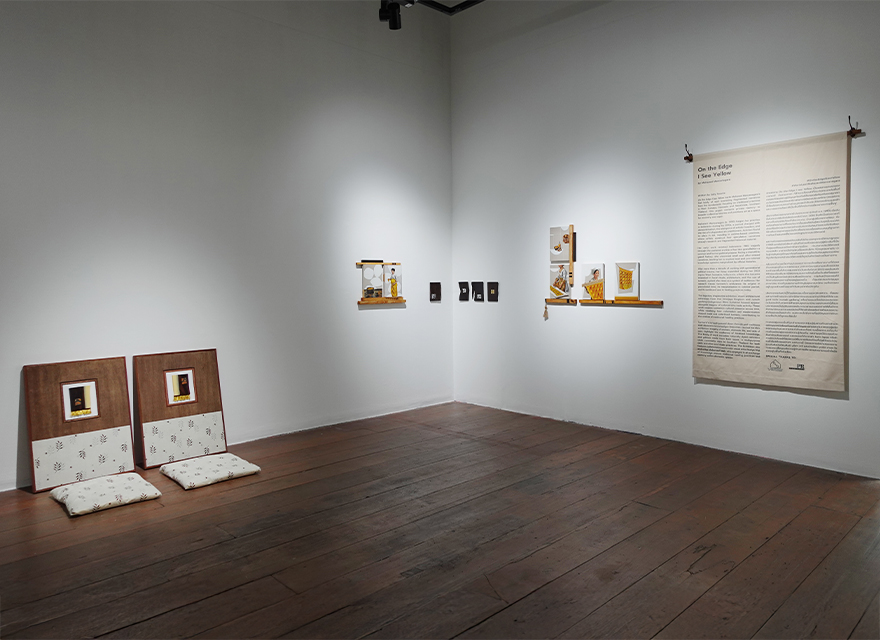
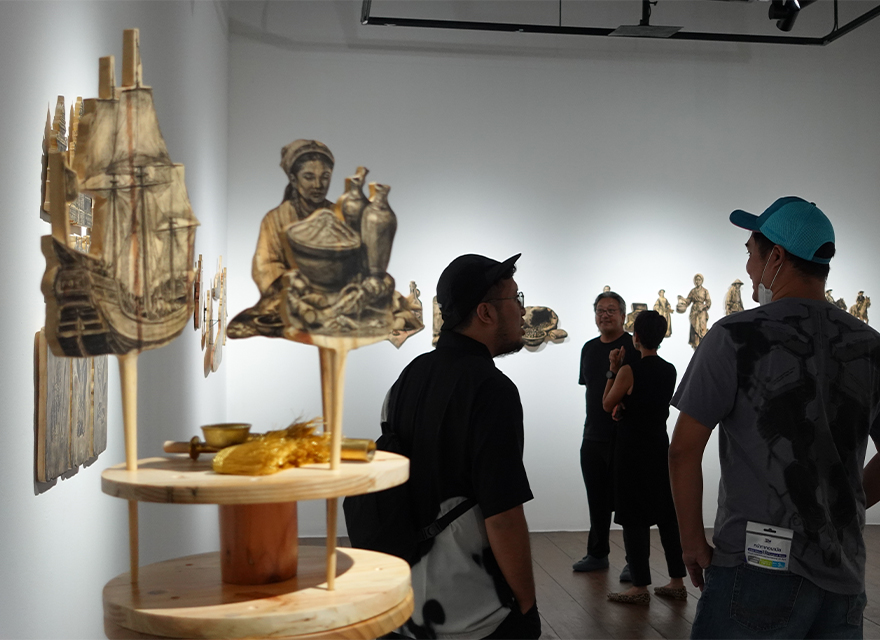
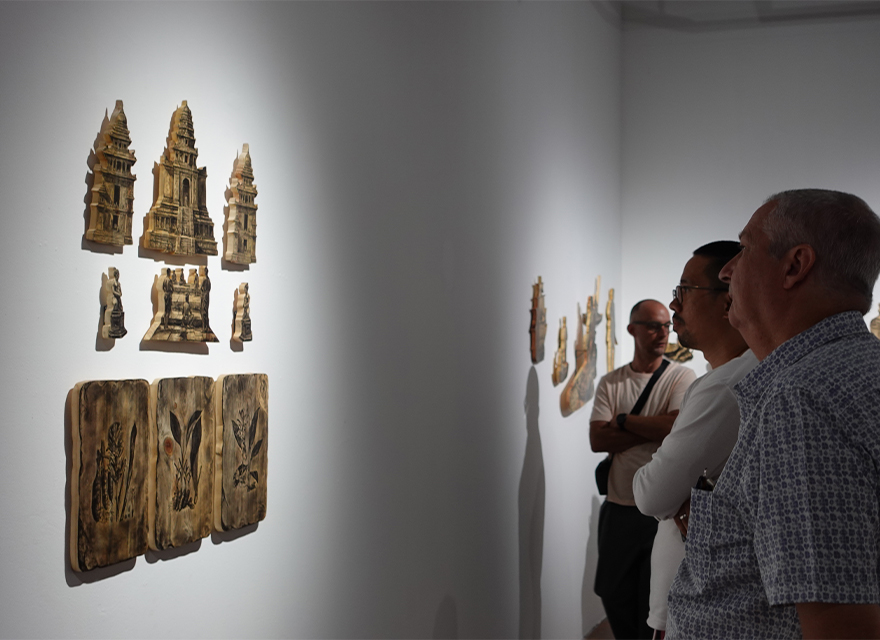
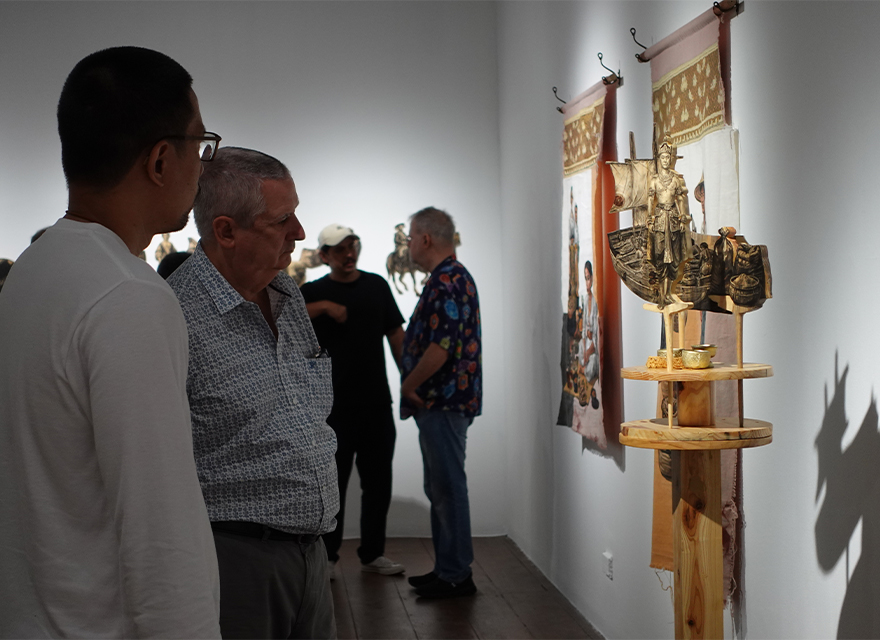
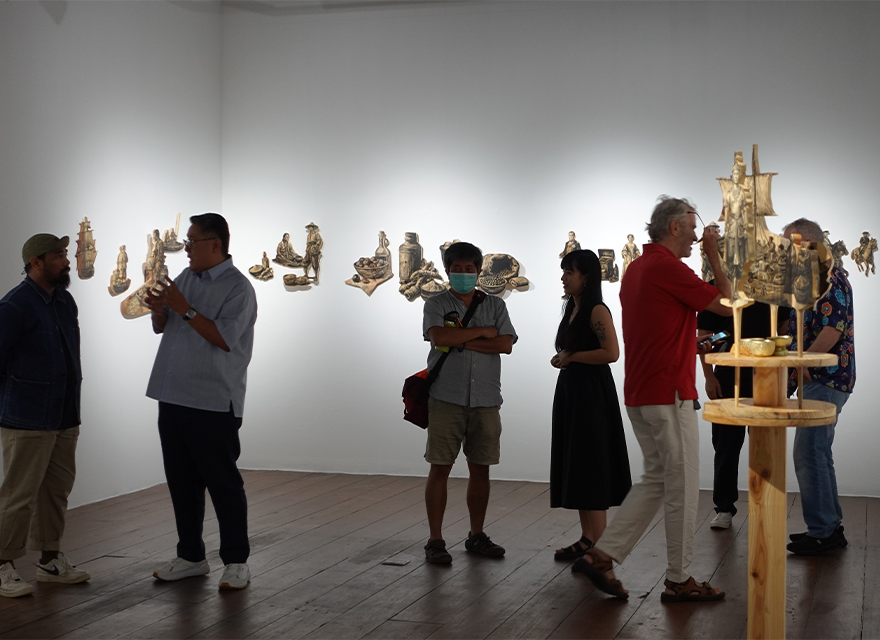
In On The Edge, I See Yellow, Maharani shifts her lens away from the direct representation of violence and toward acts of care, healing, and quiet resistance. Her practice evolves—not by abandoning history, but by approaching it from a different vantage point. Here, healing is political, and care becomes a method of archival recovery. Turmeric—yellow, familiar, and persistent—emerges as a central motif: a rhizome that crosses boundaries between the domestic and the historical, between the botanical and the embodied.
While her other works engaged directly with the ruptures of 1965, Maharani’s interest in this series lies in how those ruptures are remembered and sustained within the intimate sphere—especially through the often-overlooked labor of women. Memory, in this context, is not confined to state archives or official documentation. It resides in kitchens, in gestures of care, in inherited recipes, and in the healing rituals passed down through generations. She reconceptualizes the archive as something embedded in the body—a living, breathing repository of knowledge formed through repetition, ritual, and survival.
This exhibition expands that inquiry into the deeper colonial structures that have shaped land, labor, and health in Indonesia. Maharani investigates the long shadow of the 19th-century Dutch cultuurstelsel (cultivation system), a forced agricultural policy that not only extracted economic value but also transformed social hierarchies and marginalized indigenous knowledge systems. Turmeric, once again, becomes a point of departure: a plant that persisted despite extraction and erasure. It serves here not only as a healing agent or culinary spice, but as a witness to histories of forced labor, medical repression, and ecological displacement.