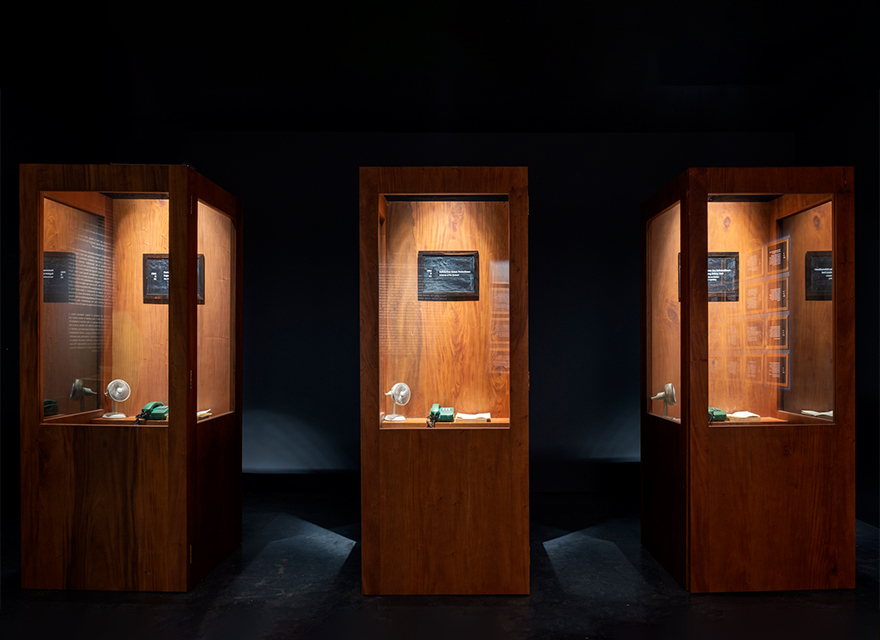
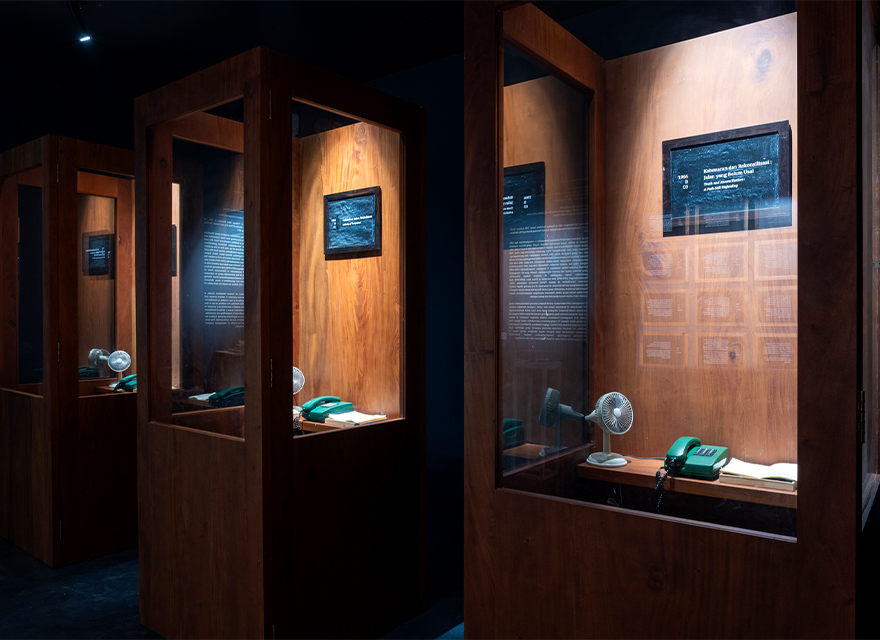
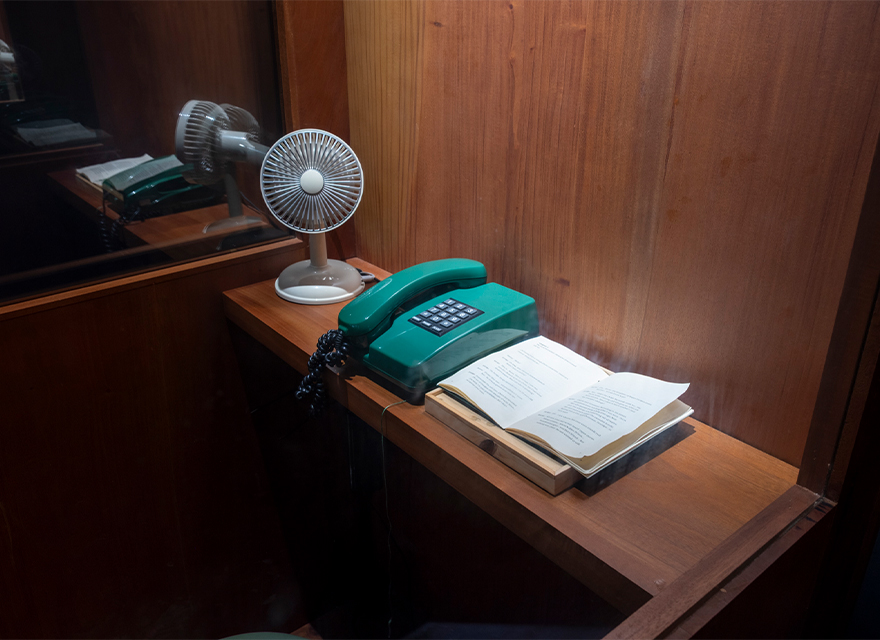
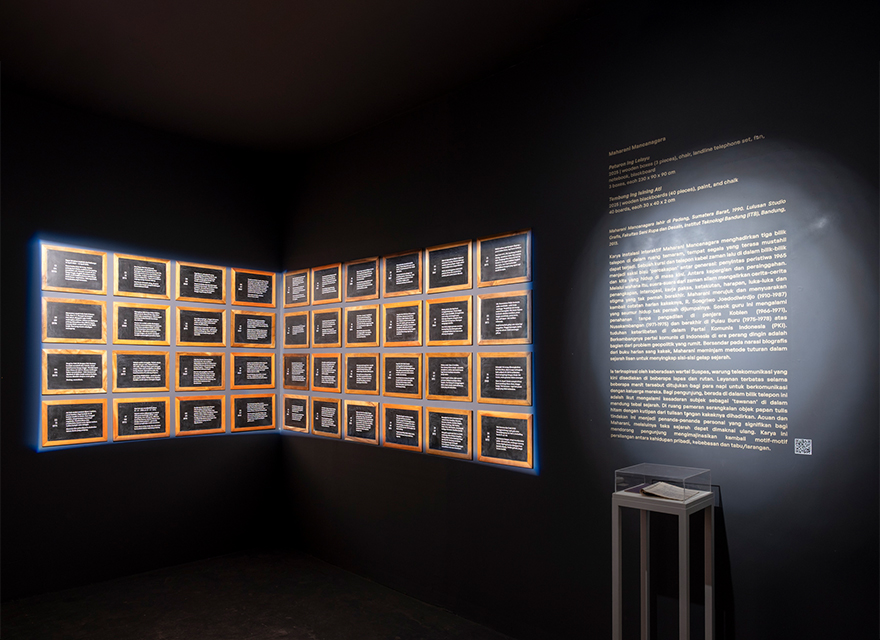
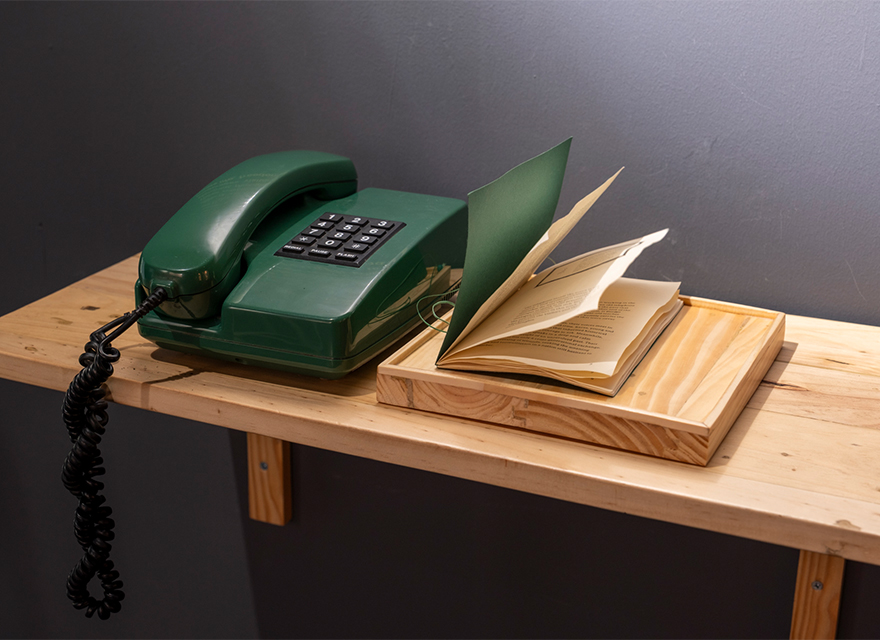
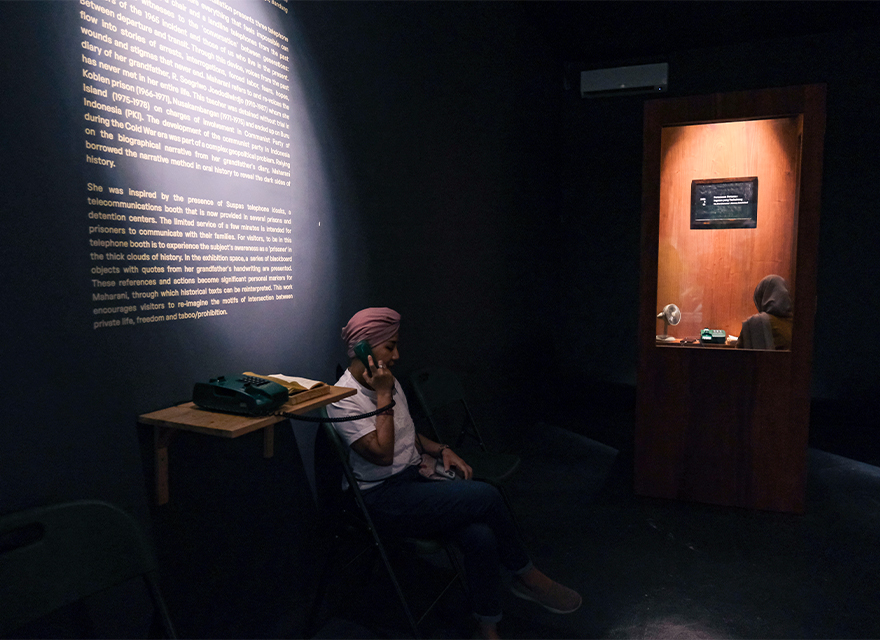
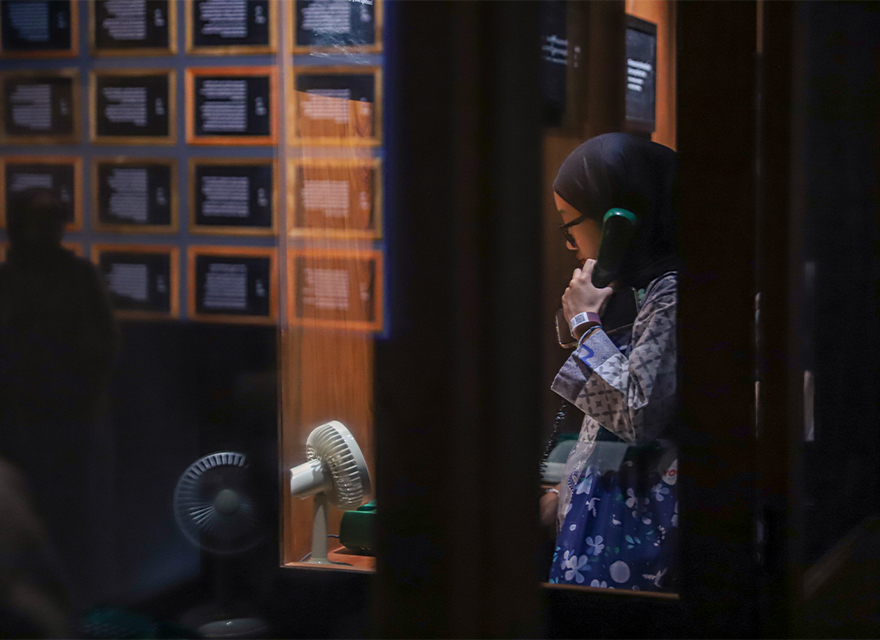
Maharani presents a telephone booth in the middle of a vast, silent room—a place where a conversation that’s supposed to be impossible becomes existent. Inside the booth, a chair and a classic corded telephone stand as silent witnesses to a meeting between two generations: a survivor of the 1965 tragedy and his granddaughter in the present day. When the receiver is lifted, a voice from the past weaves through, recounting arrests, interrogations, forced labor, and the lingering fears and hopes from Buru Island. Yet outside the booth, silence is the only presence—a void symbolizing erased memories, suppressed history, and stifled voices.
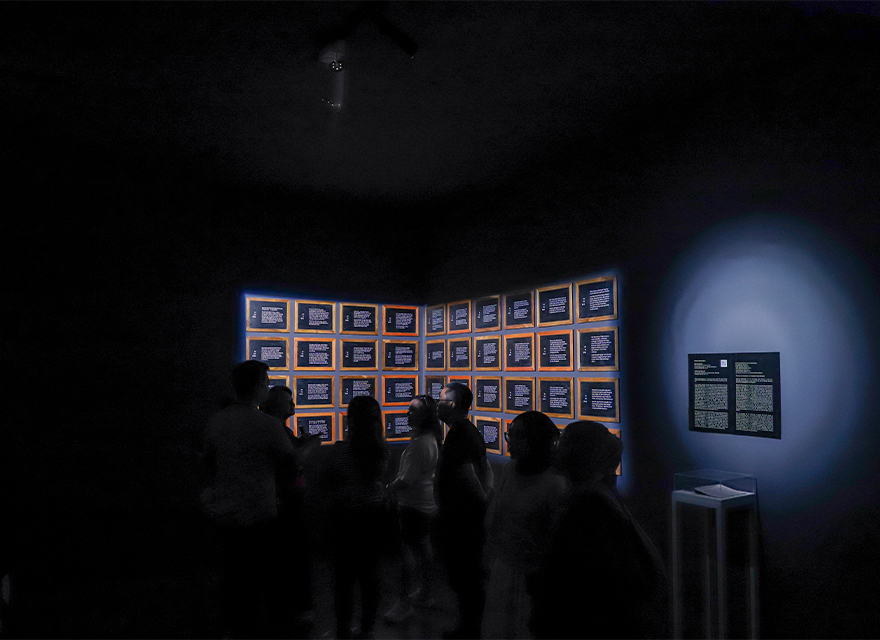
This installation invites us not only to listen but also to experience how history continues to seek its path to be told. The silence surrounding the booth becomes a symbol of resistance, reminding us that suppressed memories tend to echo louder. This never-ending dialogue becomes a call for the present generation to comprehend, remember, and carry on the stories of those who have been silenced. Paturon Ing Lelayu is not merely a journey of remembrance but also a moment of reflection: how can we ensure that these voices do not dissipate in silence?
The telephone inside the booth is not merely a tool of communication but a metaphor for how the past constantly attempts to speak to the present. The dialogue continues not only between the two characters in this work but also between the visitors and their own thoughts.